

 By
By The Green Tree Monitor, also known as the Emerald Tree Monitor, is a captivating and vibrant reptile that has gained popularity among reptile enthusiasts due to its striking appearance and unique behavior. This arboreal lizard is native to the tropical forests and swamps of Indonesia, Papua New Guinea, and the surrounding islands. In this comprehensive guide, we will explore the Green Tree Monitor’s habitat, appearance, behavior, care requirements, diet, and breeding information, providing you with a thorough understanding of this fascinating reptile species.
Overview of the Green Tree Monitor
Scientific name: Varanus prasinus Common names: Green Tree Monitor, Emerald Tree Monitor Natural habitat: Forests, plantations, and swamps Adult size: 30 to 39 inches Average lifespan: 10 to 15 years Diet: Carnivorous – primarily insects Housing: Tall vivarium (minimum 36″ x 18″ x 36″) Experience level: Intermediate to advanced
Origins and Distribution
The Green Tree Monitor (Varanus prasinus) is predominantly found in the forests, swamps, and plantations of Indonesia, Papua New Guinea, and the surrounding islands. Its distribution is primarily to the east of Lydekker’s Line, which separates the Oriental and Australian faunal regions within the Indo-Australian Archipelago.
This reptile’s natural habitat consists of tropical rainforests, where it thrives in the dense foliage and humid environment. Its arboreal nature and keen ability to camouflage make it an elusive and fascinating creature to study in the wild.
Physical Appearance and Behavior
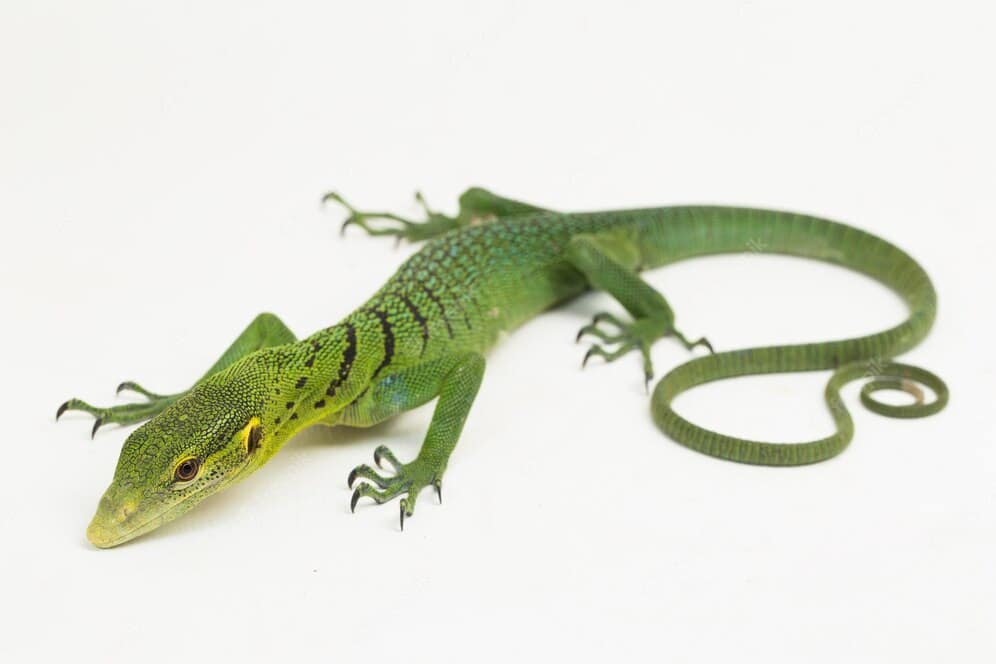
The Green Tree Monitor is known for its stunning coloration, which ranges from lime green to dark jade, with various blue-green shades in between. Its body is adorned with dark, transverse dorsal bands and occasional light blue dots.
As an arboreal species, this reptile spends most of its time in trees, using its sharp claws and prehensile tail to maneuver through the branches. Its slender body and long limbs give it the classic monitor lizard appearance, allowing it to move gracefully and swiftly through its environment.
These lizards are masters of camouflage, blending seamlessly into their leafy surroundings to avoid predators. They are not naturally aggressive and prefer to hide from danger rather than confront it. In addition to their agility on land, Green Tree Monitors are also adept swimmers, demonstrating remarkable versatility in their natural habitat.
Size and Lifespan
Adult Green Tree Monitors typically measure between 30 and 39 inches in length, with males tending to be larger than females. However, many captive specimens only grow to around 24 inches. When provided with an ideal environment and proper care, these reptiles can live for 10 to 15 years, making them a long-term commitment for reptile enthusiasts.
Temperament and Social Behavior
Green Tree Monitors are considered the most sociable of all lizard species. In the wild, they live in small groups consisting of a dominant male, several females, and a few other males and juveniles. These groups allow for social interaction among members, although the dominant male will assert his authority when necessary.
These diurnal reptiles are most active during the day and enjoy climbing through their environment. As pets, they may tolerate being in close proximity to their owners once they become accustomed to their presence. However, they are not ideal for handling, as their natural instinct is to flee from unfamiliar situations. While they are not aggressive, they may bite if they feel threatened.
Housing Your Green Tree Monitor
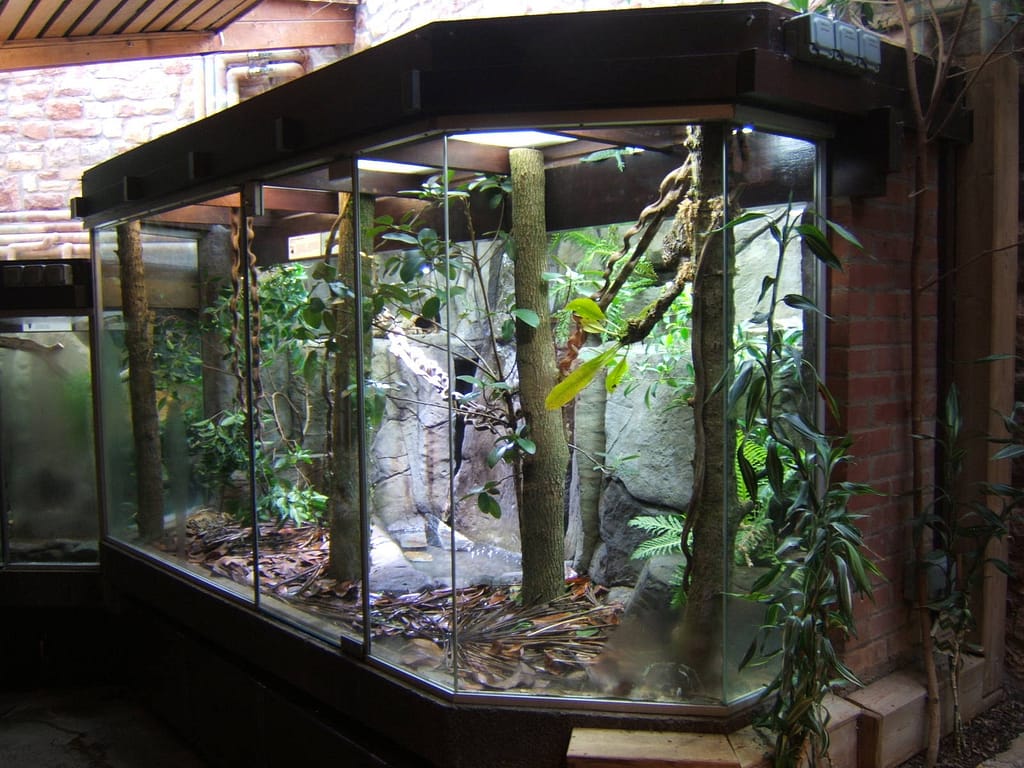
Creating a suitable enclosure for a Green Tree Monitor can be a challenging task, as it requires replicating their natural forest habitat as closely as possible. The key factors to consider when designing their living space include the enclosure size, lighting, temperature and humidity control, substrate selection, and decoration.
Enclosure Size
Considering the average adult size of a Green Tree Monitor, a large enclosure is necessary to provide ample space for this active reptile. While commercially available reptile enclosures may be suitable, many owners opt to build custom enclosures to meet their needs. At a minimum, the enclosure should measure 36″ x 18″ x 36″, but a larger size of 48″ x 24″ x 48″ is recommended.
The height of the enclosure is particularly important, as these arboreal lizards love to climb and explore their surroundings. Incorporate branches, log stumps, and other climbing structures within the enclosure to encourage their natural behavior.
When selecting materials for the enclosure, opt for wood or plastic rather than glass. These reptiles can become confused by glass, potentially injuring themselves by running into it.
Lighting
UVB lighting is essential for Green Tree Monitors, as it aids in their production of Vitamin D, which in turn facilitates calcium absorption. A UVB lamp should be provided to ensure they receive adequate light and warmth.
Temperature and Humidity
Maintaining appropriate temperature and humidity levels within the enclosure is crucial for the health of your Green Tree Monitor. The daytime temperature should range between 77-86°F, with nighttime temperatures of 71-75°F. To create a temperature gradient within the enclosure, position a basking lamp on one side, allowing the opposite side to remain cooler. Basking temperatures should be between 95 to 100°F.
Green Tree Monitors require a high humidity level of 80%. This can be achieved by misting the enclosure multiple times per day or by installing an automatic misting system. A hygrometer can be used to monitor humidity levels, ensuring they remain within the appropriate range.
Incorporating live plants, such as Ficus Benjamina, and providing a shallow water source within the enclosure can also help maintain humidity.
Substrate and Decoration
The substrate used within the enclosure should be capable of retaining moisture without becoming overly saturated. A combination of soil, sand, or a mixture of forest soil, peat, and gravel can be used to achieve the desired moisture level. A layer of mulch or moss, such as cypress mulch, can be added to help maintain moisture.
In addition to selecting a suitable substrate, it’s important to recreate the Green Tree Monitor’s natural habitat by providing climbing structures, hiding spots, and items for exploration. Ensure there is enough depth within the substrate to allow for burrowing and digging, and create a “hide box” for your reptile to retreat to when necessary.
Cleaning
Green Tree Monitors can be somewhat messy, often using their water bowl as a toilet. Change the water regularly and clean the bowl thoroughly at least once a week, or more frequently if a slimy buildup is observed.
Avoid using soil or moss collected from the outdoors, as it may harbor parasites. Instead, purchase substrate materials from a reputable gardening supply store or reptile retailer.
Regularly wipe down the enclosure walls with water-moistened paper towels, avoiding harsh detergents. Remove fecal matter promptly and turn the substrate monthly to maintain cleanliness. Be sure to provide fresh water after turning the substrate, as debris may have settled in the water source.
Green Tree Monitor Care
Caring for a Green Tree Monitor requires diligence, making it a suitable pet for those with prior reptile experience and ample space for a large enclosure. Their care involves providing proper nutrition, handling with caution, and monitoring for common health issues.
Food and Water
Green Tree Monitors require a constant supply of fresh, clean water. In terms of diet, they are not particularly picky eaters, but it’s important to offer food in appropriate quantities. Offer small insect meals daily or every other day, ensuring that only enough food for one feeding is provided at a time.
Insects, such as crickets, mealworms, Dubia roaches, and grasshoppers, are ideal food sources for these reptiles. Occasionally, a pinky mouse can be offered, but it’s important to note that Green Tree Monitors have difficulty digesting the fur of adult mice and rats.
Before feeding your reptile, dust the insects with a reptile supplement calcium powder, which can be purchased at pet stores and online retailers.
Handling
Green Tree Monitors are not recommended for inexperienced reptile owners, as they require specialized care and a significant amount of space. While they are generally sociable and non-aggressive, they do not enjoy being handled frequently. Their natural inclination is to flee from unfamiliar situations, and they may bite if they feel threatened.
Over time, your Green Tree Monitor may become more comfortable being near you, but it’s important to respect their boundaries and avoid excessive handling.
Common Health Issues
Green Tree Monitors are prone to a few health concerns, including:
- Parasitic infestations: Regular veterinary checkups can help identify and address parasite issues, particularly if your reptile displays a loss of appetite.
- Respiratory infections: Excessive mucus production may indicate a respiratory infection, which may require veterinary intervention. Monitor humidity levels within the enclosure, as too much dampness can exacerbate respiratory problems.
- Dehydration: Ensure your Green Tree Monitor has a constant supply of clean water to prevent dehydration. Replace the water if it becomes soiled or contaminated.
- Shedding complications: Maintaining the proper humidity level (minimum 70%, ideally 80%) can help prevent shedding issues. If shed skin becomes stuck on your reptile’s toes or tail tip, it may be necessary to soak the affected area to remove it. However, avoid routinely soaking your monitor, as they generally dislike this experience.
Pairing Green Tree Monitors
While it is possible to house a bonded male and female Green Tree Monitor together in a single, large enclosure, it’s typically best to keep these reptiles individually. This is particularly true for two males, as their territorial nature can lead to fighting and dominance struggles within the enclosure.
Breeding
Little is known about the mating habits of Green Tree Monitors, and their breeding success in captivity is often limited. In the wild, females lay small clutches of 3-7 eggs in arboreal termite nests, which provide protection from predators and maintain optimal incubation temperatures. Up to three clutches may be laid per year, with an incubation period of approximately 165 days.
Upon hatching, young Green Tree Monitors typically feed on termites. They reach sexual maturity within 2-3 years.
Choosing and Purchasing a Green Tree Monitor
While Green Tree Monitors are not currently listed as an endangered species, they are considered vulnerable and are protected under Indonesian law. As such, it’s important to purchase your reptile from a reputable dealer and ensure you have the necessary experience and resources to provide proper care.
Expect to pay between 1,200 for a Green Tree Monitor, making it a significant investment for any reptile enthusiast. Proper care, including maintaining appropriate temperatures and lighting conditions, is crucial for the health and well-being of your pet.
Before bringing your new Green Tree Monitor home, schedule a veterinary checkup to assess its overall health and screen for parasites, which are common among wild-caught reptiles. This proactive approach can help ensure the health and longevity of your new pet.